The Clan
Ninjas. Tidy. Extremely judgemental.
They build temples, they queue politely behind each other, and they have opinions about your form. Sixteen characters, seven of whom would rather throw something than get close to you.
Home: THE KEEP
A Nopal Games game · built, playable, nearly out
Five roads. Two homes. Snacks for money.
A clan of ninjas on one side. A horde of extremely misunderstood monsters on the other. Between them, five stretches of road and a very serious argument about who gets to walk down them. You pay for everything in food, and there is never quite enough food.
The whole game in four steps
No resource trees, no build orders to memorise, nothing hidden behind a menu. Four rules, and then twenty hours of arguing with them.
Your first fighter out of the door is a food collector, every single battle. They walk, they gather, snacks come in. Everything else you ever do is paid for by them, which means the whole game is really a question about how long you can go on being patient.
The clan raises a temple, the horde digs a lair. Either way it costs snacks, it takes a few seconds to go up, and until it does, that road is somebody else’s. Pave it later into a highway and it carries twice the traffic and earns on its own — and if it falls, the whole road goes with it.
Your squad sits along the bottom. Tap one, pay the snacks, and out they come onto the road you chose. Then they are on their own: they walk, they meet whatever is coming the other way, and they get on with it. Shooters shoot over the ones in front. Everybody strikes once a second, so a fighter’s attack number is their damage per second.
The keep and the cave span all five roads and take a lot of hitting. Empty theirs and it is over. Empty yours and it is also over, just worse. Two missions out of thirty-two end another way entirely, and we are not going to spoil which.
Pick a side, and mean it
Every character has their own numbers, their own reach and their own special. The two rosters are balanced against each other over thousands of simulated battles — which is a dry way of saying neither one is the easy one.
Ninjas. Tidy. Extremely judgemental.
They build temples, they queue politely behind each other, and they have opinions about your form. Sixteen characters, seven of whom would rather throw something than get close to you.
Home: THE KEEP
Monsters. Misunderstood. Also quite damp.
They dig lairs, they arrive in numbers, and they are genuinely hurt that you assumed the worst. Sixteen characters, the same seven-throwers shape, an entirely different feel in the hand.
Home: THE CAVE
Seven go to a battle: one food provider and six fighters. Buy both extra slots in the marketplace and it is nine. Choosing who those six are is most of the game, and getting it wrong is most of the fun.
Bought once, yours for ever
Coins come from winning. The marketplace turns them into new characters, new colours, and these — bought once, on in every battle afterwards.
Hit them from above
Tap the mallet, tap an enemy, pay snacks, done. Fighters only — buildings just shrug.
Patch a fighter up
Put hit points back into one of your own, never more than they started with. Then the heart rests.
Make room in the road
Step one of yours back out of the crush, in behind the next one along. No waiting, and it saves lives.
Twice the traffic, and snacks
Pave a road you already hold. Double the capacity, and it brings food in like an extra collector.
Rain stops slowing you down
Weather takes a bite out of everybody’s walking speed. Hand your lot umbrellas and it takes a bite out of theirs.
Nobody nods off in the dark
A lamp for everyone you send out. They can see after dark, and — the part that wins fights — they stop dozing while they wait.
Thirty-two missions, and they do not sit still
Every mission after the tutorials is a normal battle plus one idea. The idea always shows you what it does once, for free, before it does it to you for real. Then it is on a clock, and the clock is not on your side.
It comes through. It does not check.
Pays nobody, salvages nothing. It is meant to feel like a hole.
Eight seconds of it, and it warns you first. Barely.
Rain and snow slow everybody down. See: umbrella.
Every price moves twice a second, between half and double. Time your taps.
One mission stops being a battle and becomes a match. Golden goal and all.
Only ever on a road you both share, because it is only fair if it hurts both of you.
One mission is won on ground, not on damage. Six unbroken seconds a point.
And the computer can surrender. When it has no food coming in and cannot afford its cheapest fighter, it asks you to accept — and you are allowed to say no.
Moving pictures
The game is playable end to end; the clips are just the last thing on the
list. When they are cut they drop straight into media/ and
these frames light up — the filenames the page expects are in
media/README.txt.
Clip coming
Clip coming
Clip coming
Screenshots
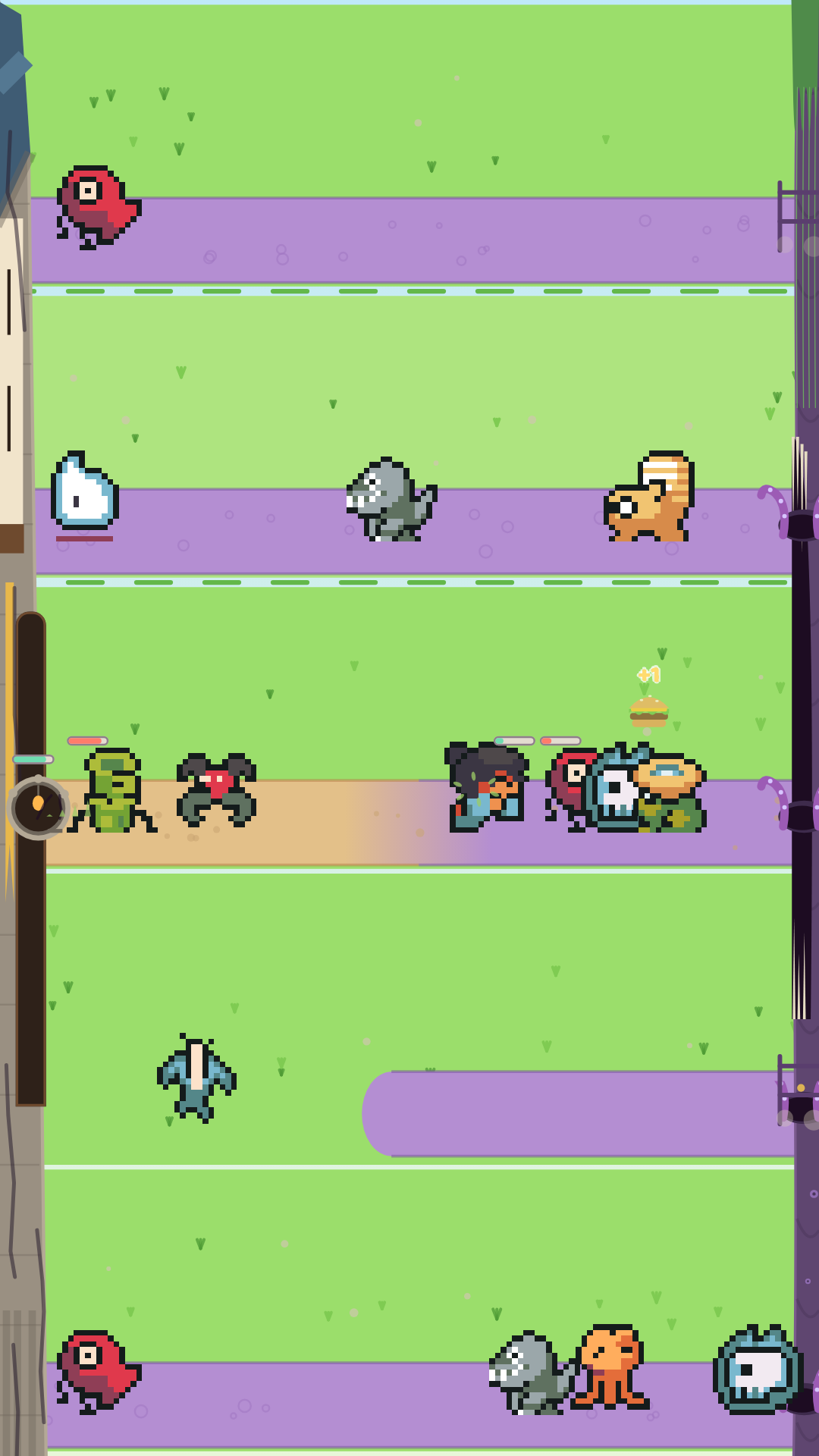
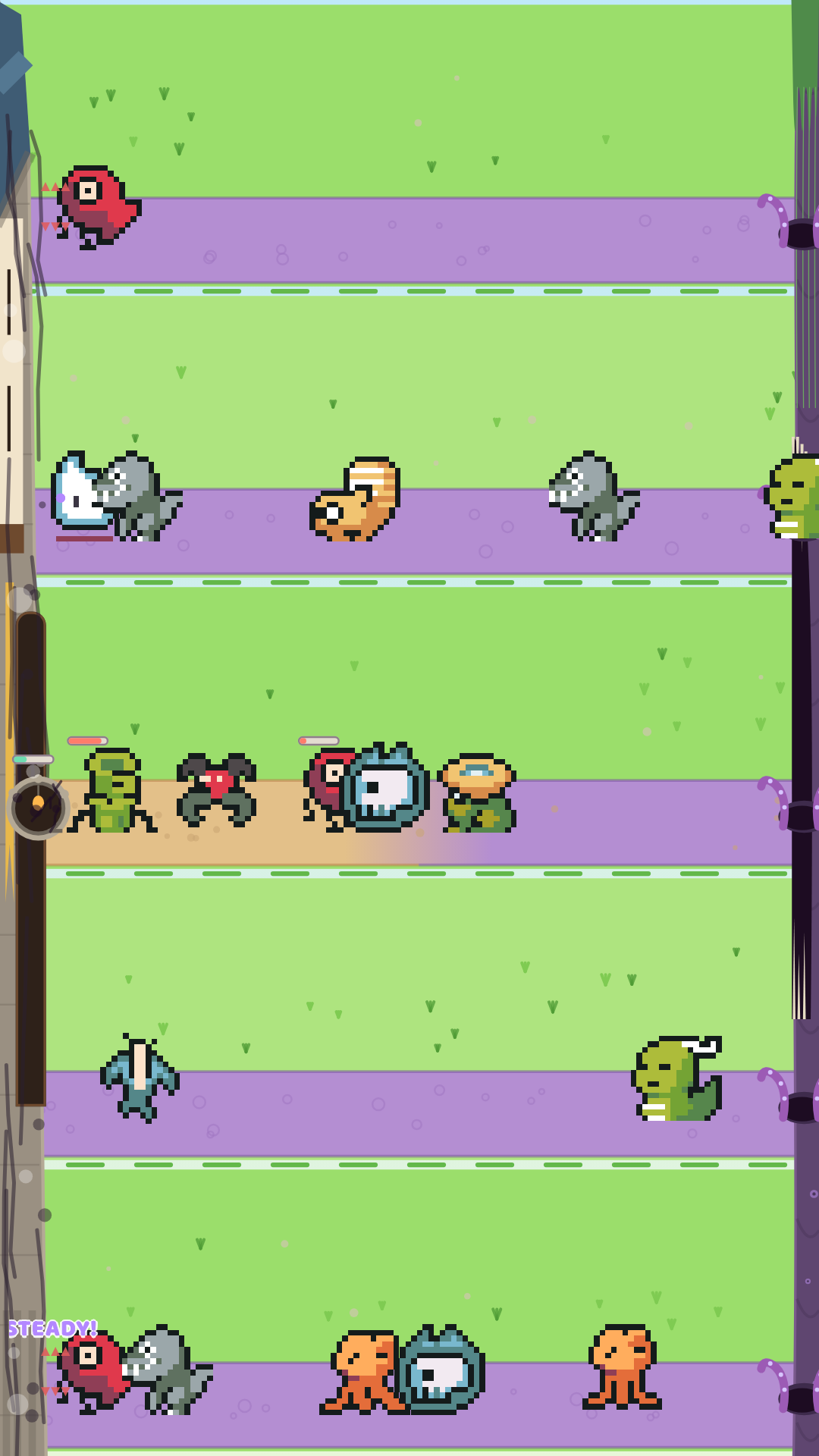
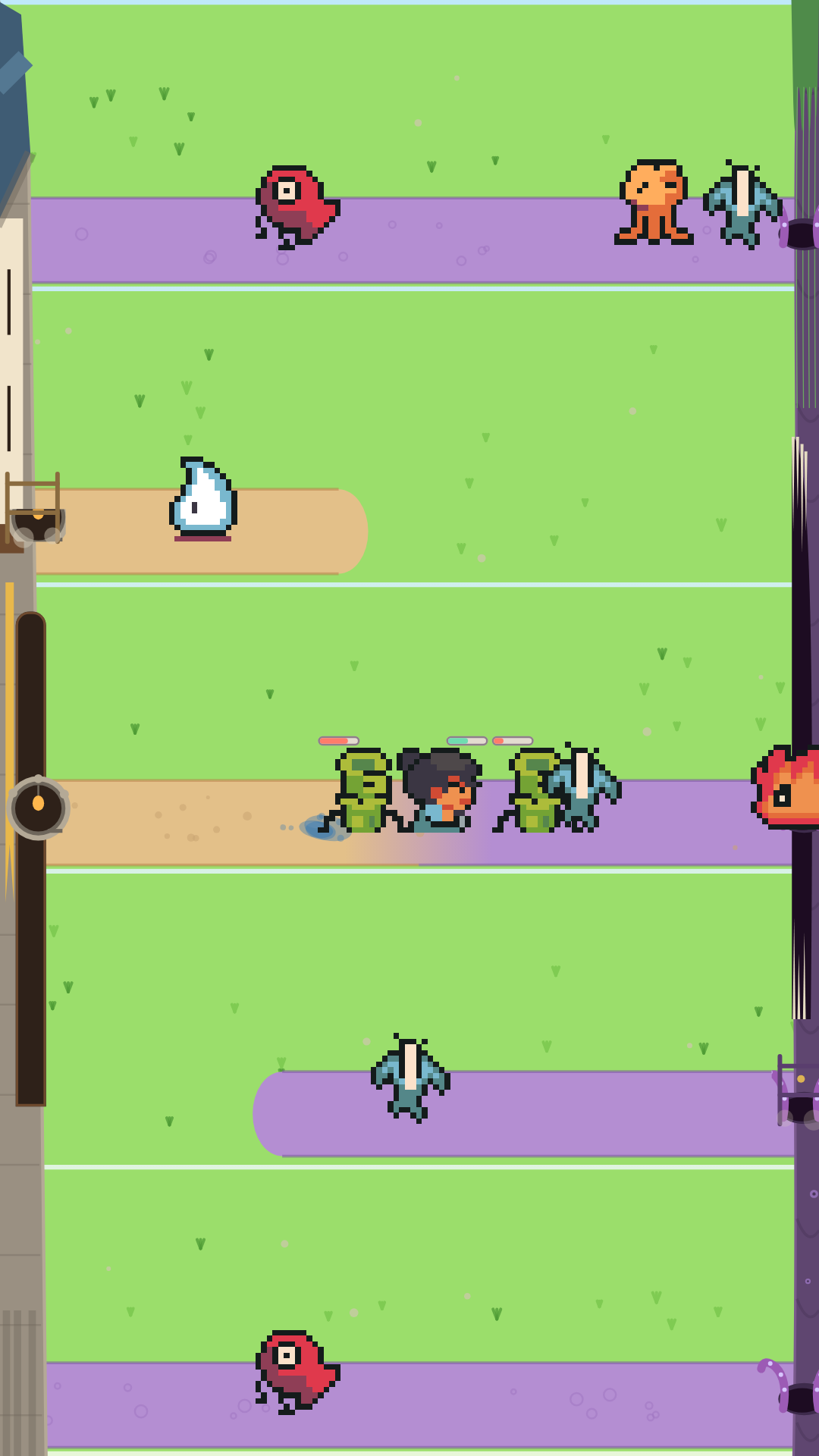
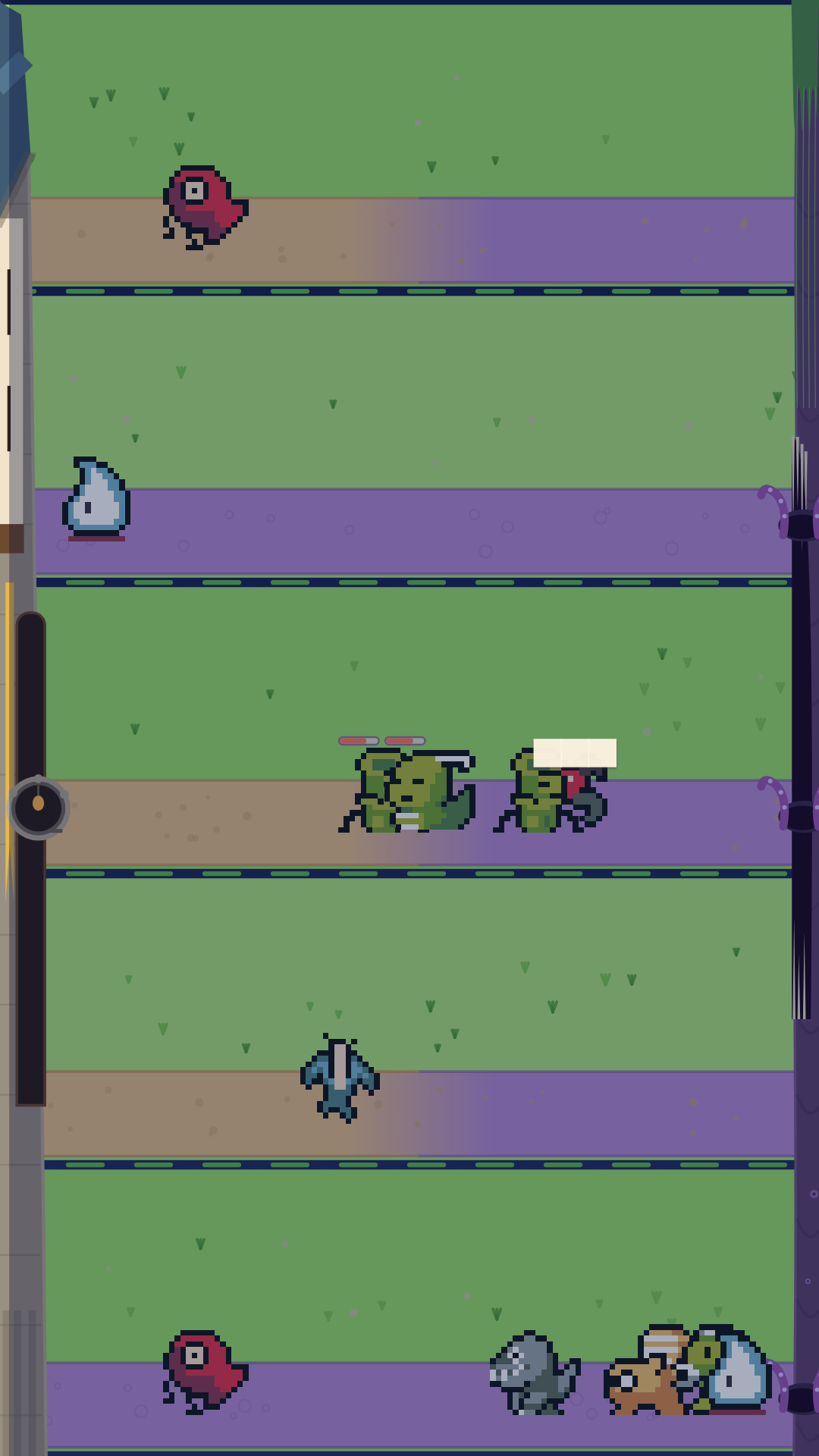
Every platform we can reach
Six platforms, one game, no platform treated as the afterthought. The game itself is done — all thirty-two missions, eight languages, online play, the lot — and the shops are the last thing left to open. Every badge below goes live the day its store does, and the ones marked SOON are honest about being placeholders rather than pretending to be links.
Every badge is a placeholder until that store is actually open. We would rather show you a grey button that admits it than a live-looking one that goes nowhere.
There is no mailing list yet, because setting one up badly is worse than not having one. Until there is, the fastest way to hear about it is to email us and say “tell me when” — a human reads it.
contact [at] nopalgames [dot] comReasonable questions
Sort of, and it argues with the genre in two places. Nothing is static — every fighter walks. And you are attacking at the same time as defending, down the same five roads, with the same money.
Yes: quick match against whoever is waiting, or share a code with a friend. It goes phone to phone wherever it can, and only falls back to a relay when two networks genuinely will not introduce themselves. Both sides start identical — no handicaps online, ever.
No. Coins come from winning battles, and they buy characters, colours and the six tricks above. You can also buy coins, which buys you time, not power — every single thing in the shop is reachable by playing.
Three settings, and here is the honest version: on the hardest one the computer plays by exactly your rules — same prices, same income, same reload. The two easier settings do one thing, which is take a bite out of how hard its fighters hit. That is the whole difference. No secret extra money for the machine.
Only for online matches. Both campaigns, every skirmish and the whole marketplace work on a plane.
English, Spanish, German, French, Italian, Japanese, Korean and Polish. All eight are written, not machine-translated and left to rot.